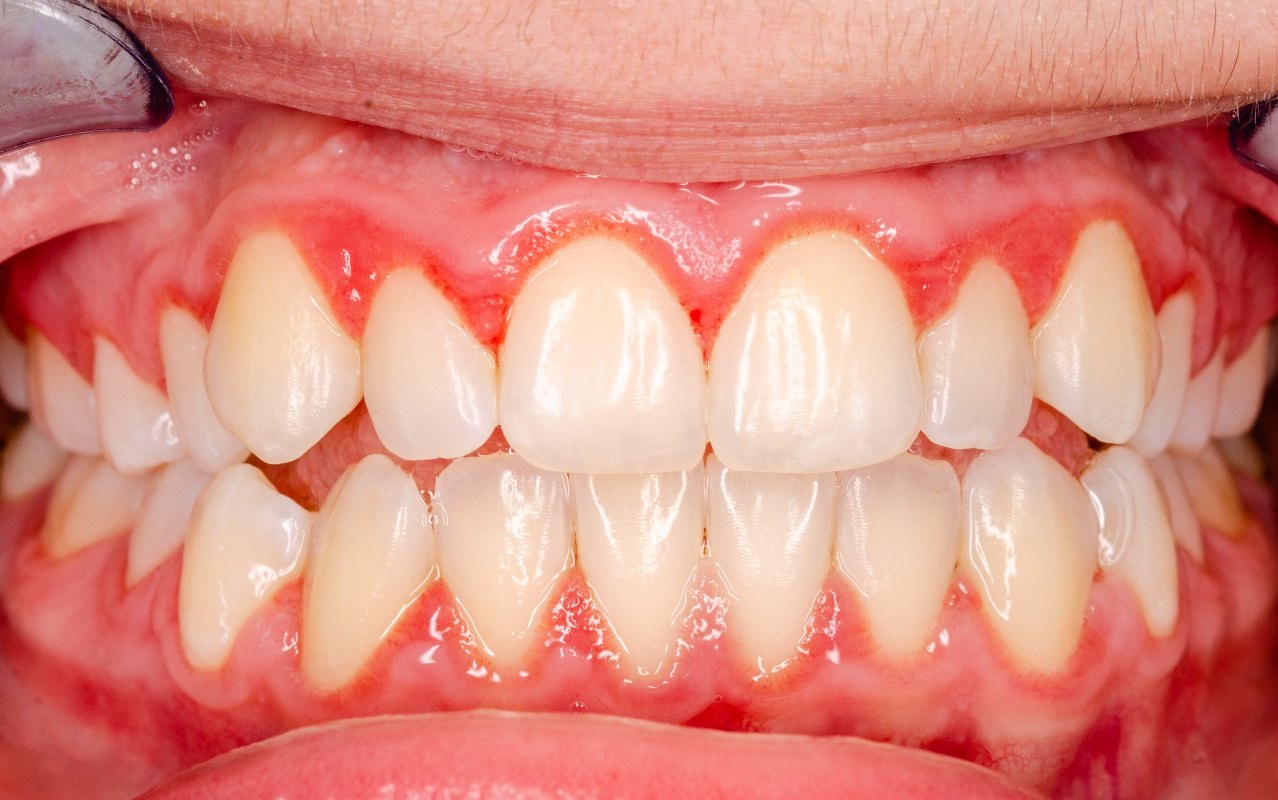
Many people notice a small amount of blood in the sink when brushing their teeth and assume it is normal. In reality, bleeding gums are often an early warning sign that your gums are inflamed or unhealthy. Ignoring this symptom can allow the condition to progress into more serious gum disease.
At Dr Mali’s Dental Clinic in Fulham, we often see patients who are surprised to learn that bleeding gums are not something that should be ignored. The good news is that in many cases, the problem is easily treatable when caught early.
The most common cause of bleeding gums is plaque build-up along the gum line. Plaque is a sticky film of bacteria that constantly forms on the teeth. If it is not removed effectively through brushing and cleaning between the teeth, it can irritate the gums.
This irritation leads to gingivitis, which is the earliest stage of gum disease. Gingivitis causes the gums to become red, swollen and prone to bleeding, particularly during brushing or flossing.
Other factors can also increase the likelihood of bleeding gums, including:
Poor oral hygiene habits
Smoking or tobacco use
Hormonal changes such as pregnancy or menopause
Certain medications
Stress or underlying health conditions
A common reaction when gums bleed is to brush less or avoid the area completely. However, this can actually make the problem worse.
Bleeding gums are usually a sign that plaque and bacteria need to be removed more effectively, not less. Continuing to brush gently twice a day and cleaning between the teeth can help reduce inflammation and improve gum health.
Using a soft-bristled toothbrush and proper brushing technique is important to avoid causing additional irritation.
If gingivitis is not treated, it can progress into periodontal disease (gum disease). At this stage, the infection can begin to affect the bone that supports the teeth.
Symptoms of more advanced gum disease may include:
Persistent bleeding when brushing or flossing
Bad breath that does not improve with brushing
Gum recession (gums pulling away from the teeth)
Loose teeth or discomfort when chewing
Early treatment is key to preventing long-term damage.
Even with good brushing, plaque can harden into calculus (tartar) over time. Once this happens, it cannot be removed with a toothbrush alone.
A professional hygiene appointment allows dental professionals to carefully remove plaque and calculus from the teeth and below the gum line. This helps the gums heal and reduces inflammation.
Regular professional cleanings, combined with good home care, play a vital role in maintaining healthy gums.
If your gums bleed regularly when brushing or flossing, it is important to have them checked by a dental professional.
Early intervention can prevent minor gum inflammation from developing into more serious gum disease. Most cases of gingivitis can be reversed with professional cleaning and improved oral hygiene habits.
At Dr Mali’s Dental Clinic in Fulham, our dental team focuses on prevention and helping patients maintain long-term oral health. If you are experiencing bleeding gums or have concerns about your gum health, booking a hygiene appointment is the first step towards restoring a healthy smile.
Fields with (*) are required.
Please contact us via this website or email without disclosing confidential information.